The asset register is a spreadsheet that was accurate on the day it was made.
For operations and facilities
Know what you own, and what it is about to need.
Tag, serial, warranty, condition, who holds it and where it is, on one register. Servicing raises its own task before it is due, and the work that follows sits on a board.
Today
What it looks like now
01
02
A service is missed because the reminder lived in one person’s calendar.
03
Nobody can say who last had the vehicle, the laptop or the radio.
What changes
What you get, and where it shows up
One register, kept current by use
Receive, assign, service and retire are guided steps, each recorded against the asset. The register is current because keeping it current is how the work gets done.
More on thisThe service asks for itself
A service due inside two weeks raises a task once, and the next due date moves on when the service is recorded. Retiring an asset needs an approval.
More on thisBought and owned, joined up
A spend request line marked as an asset becomes an asset on order once the request is approved, linked both ways, so what was bought and what is owned are the same record.
More on thisWhich services
3 of 9Where you work in it
Keep exploring
Where to next
Try the Assets rule
The rule the service runs, in your browser. No form, no call.
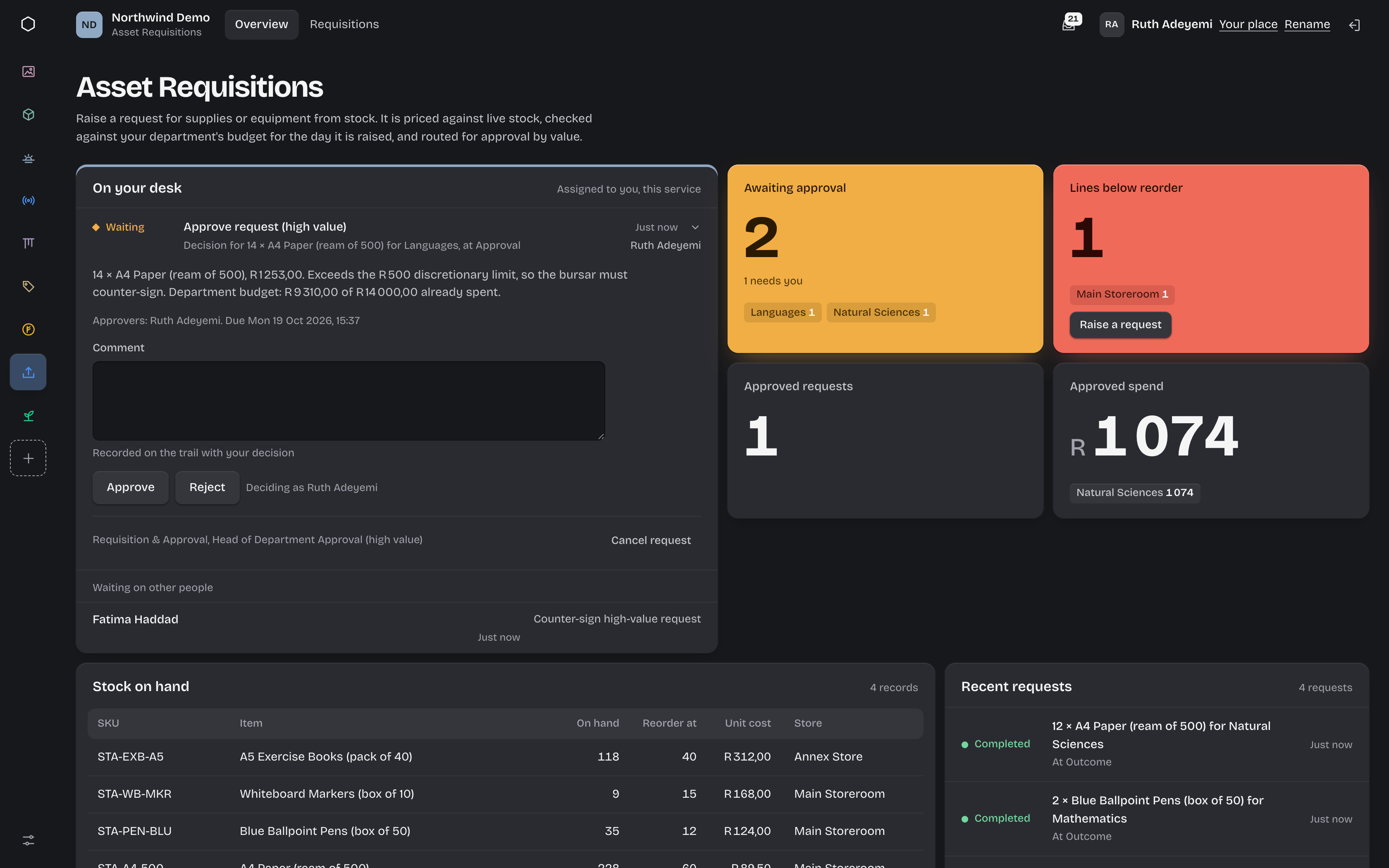
Stop chasing approvals. Start running the process.You own a process that lives in inboxes, spreadsheets and corridor reminders. Koldheim gives it a shape everyone follows, and shows you where every request is.
No spend without the right signature.Requests arrive priced from stock, with the department budget in front of the approver. Over your threshold, a second signature is required before anything moves.