One workspace
Every service your organisation switches on appears in the same workspace, on your own address, behind one sign-in. There is no second installation and no second set of logins.
A service is authored as configuration rather than written as software. That is why your second service is a subscription change instead of a second project, and why changing a threshold does not join a development queue.
Every service your organisation switches on appears in the same workspace, on your own address, behind one sign-in. There is no second installation and no second set of logins.
Who approves, above what amount, who is told and how long they have are your organisation’s own records. Your administrators change them in plain forms, without a release.
Every decision in every service writes to one append-only, hash-chained record for your organisation. Changes to a process are on it too, with before and after.
Adding a service is a line on the subscription you already have, not a second agreement and not a second vendor review.
A service does not open on a dashboard you have to interpret. It opens on the decisions sitting with you, with the figures that matter beside them. Every figure opens what it counts and offers the next action.
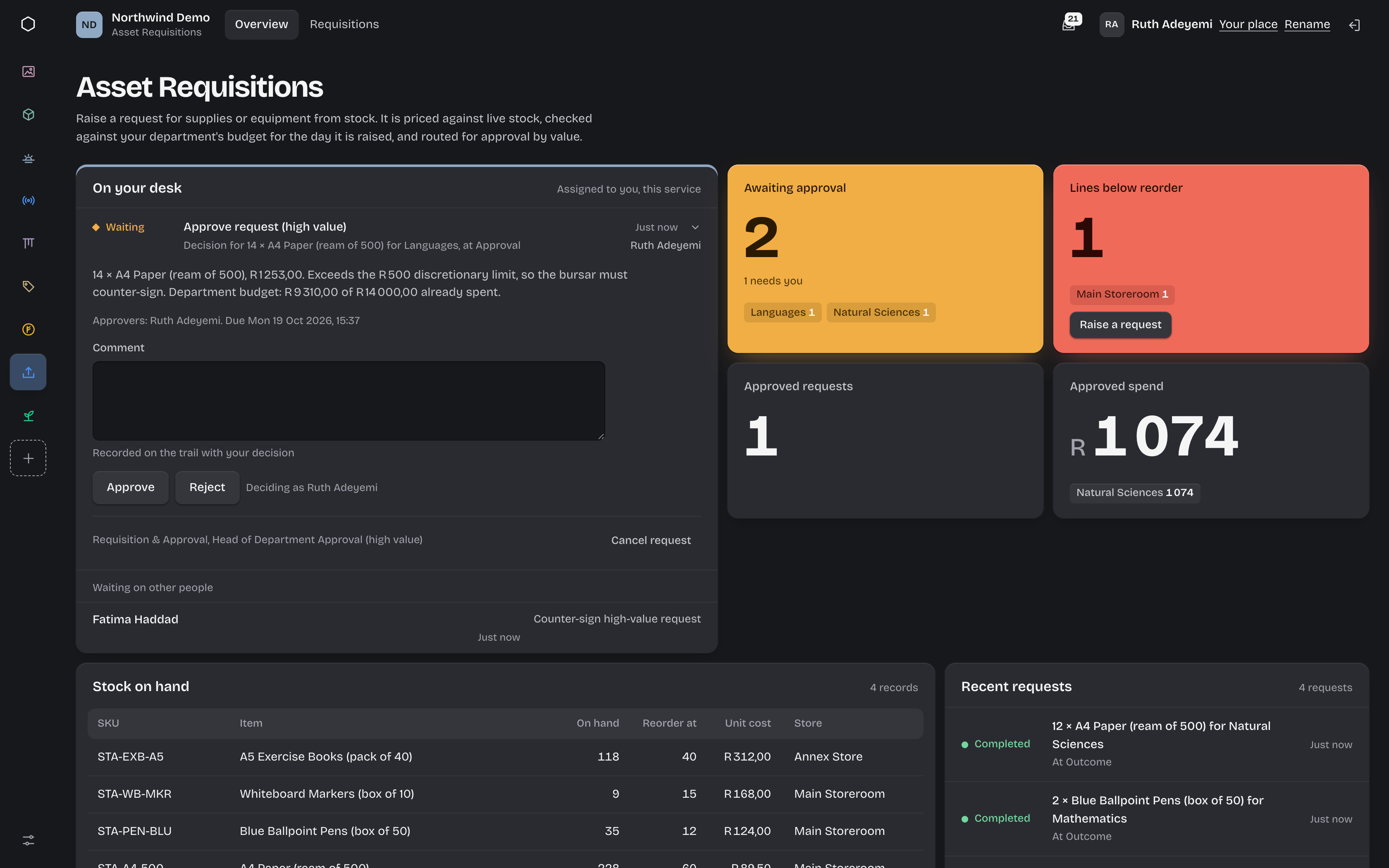
An approver sees the cost, the budget behind it and why it needs them, on the same screen as approve and reject. A rejection takes a reason, and the reason is kept.
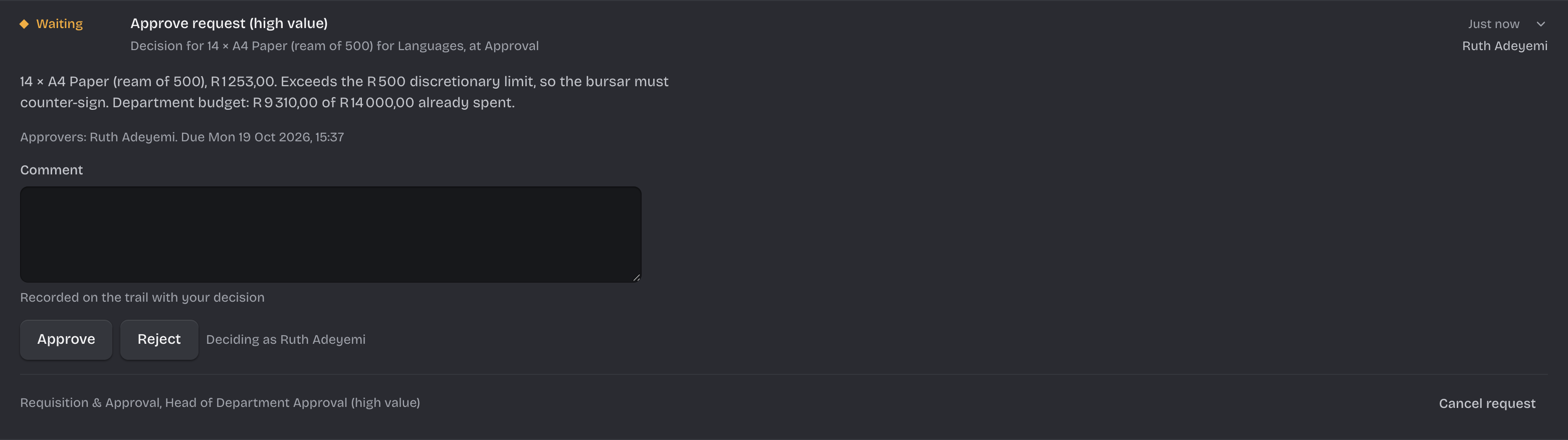
Who asked, who approved, what it cost, what was turned down and why. Append-only and hash-chained, one chain per organisation, verifying on its own.
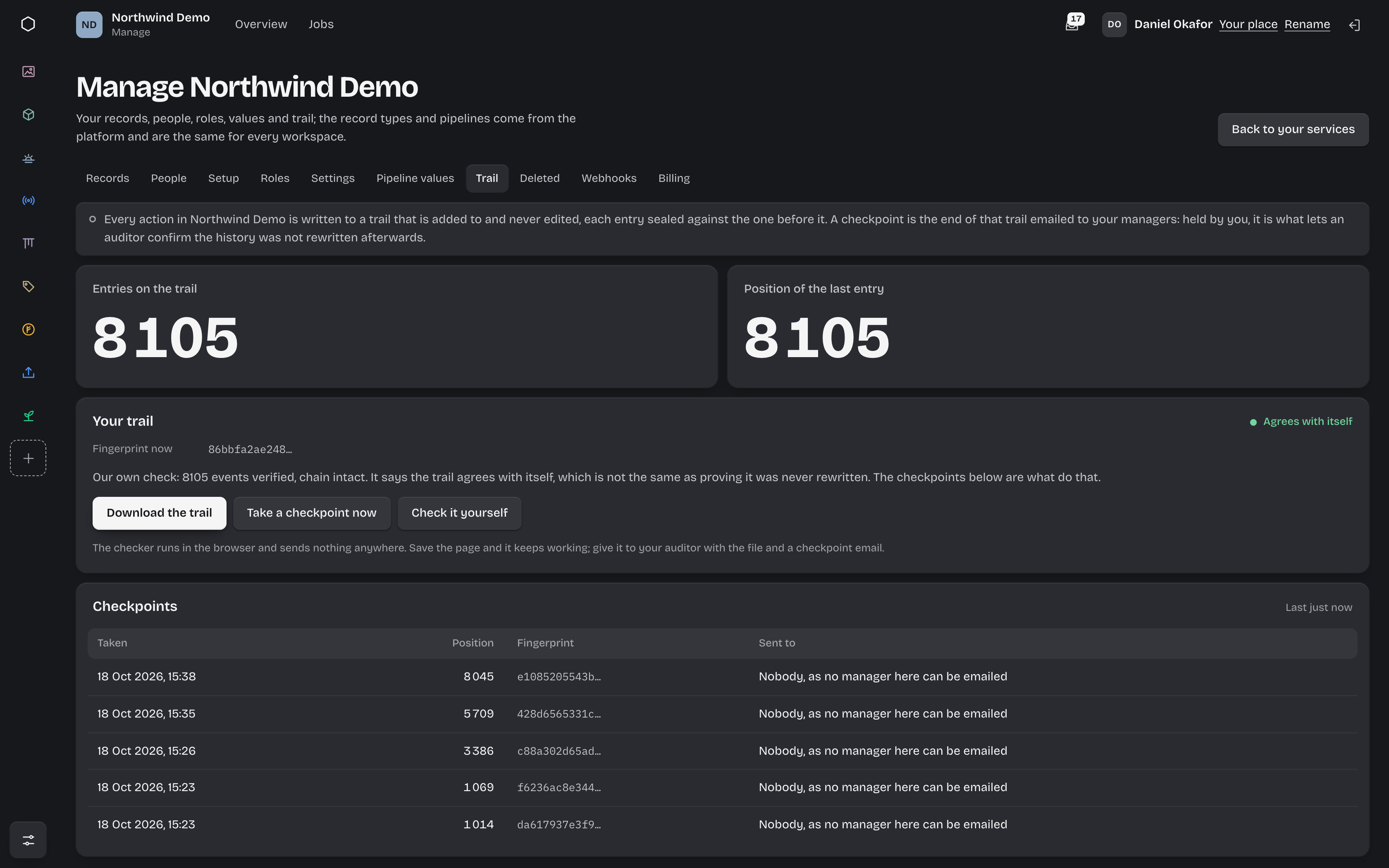
These are not configured per process. Every product gets them, because a process that forgets them is the one that fails an audit.
Whoever raised a request is left out of every approval on it, however the approvers were chosen. When only the requester could decide, your workspace’s administrators are asked instead, and the approval says why.
A file is stored once and never altered; a new upload is a new file. A decision records every file it was made on, and a file added afterwards is put in front of the people who decided.
A client, supplier or media owner gets an emailed link that does one thing, for one file, for a limited time. Only that link can answer, once, and the answer is on your trail against the address it was sent to.
A product brings its own settings, and your administrators set them under Manage, Settings. Every change is on your trail with before and after, and work in flight reads the new value at its next step.
Worth being exact about, because most vendors are not. The two are different jobs and only one of them is yours.
A process is edited as a draft, checked, then published. Work already under way stays on the version it started on.
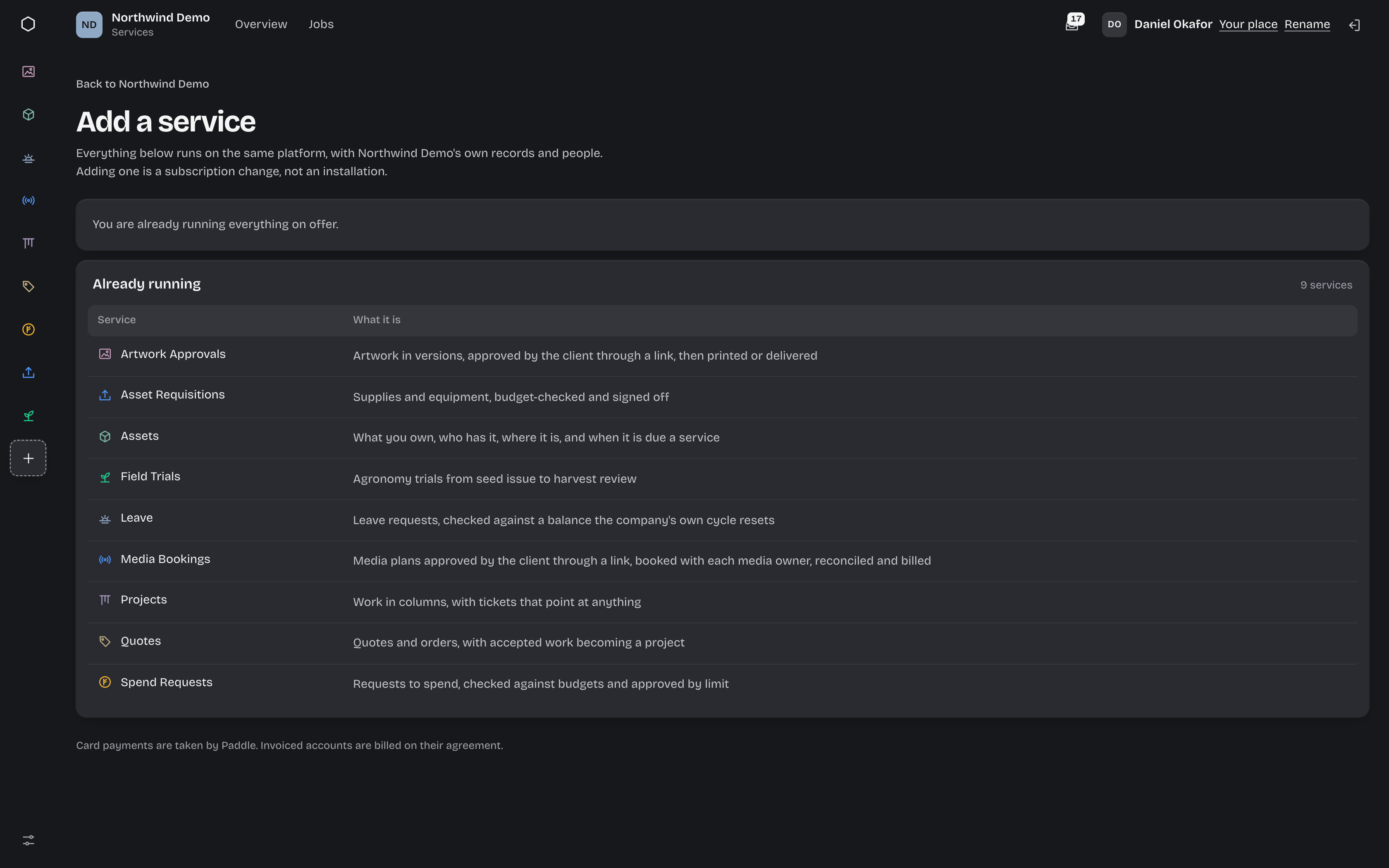
A service you add appears in the same workspace, behind the same sign-in, writing to the same trail, managed by the same administrators. Your people do not learn a second system.